


Solid Life
The Power of Protodioscin: Unveiling Its Benefits and Uses

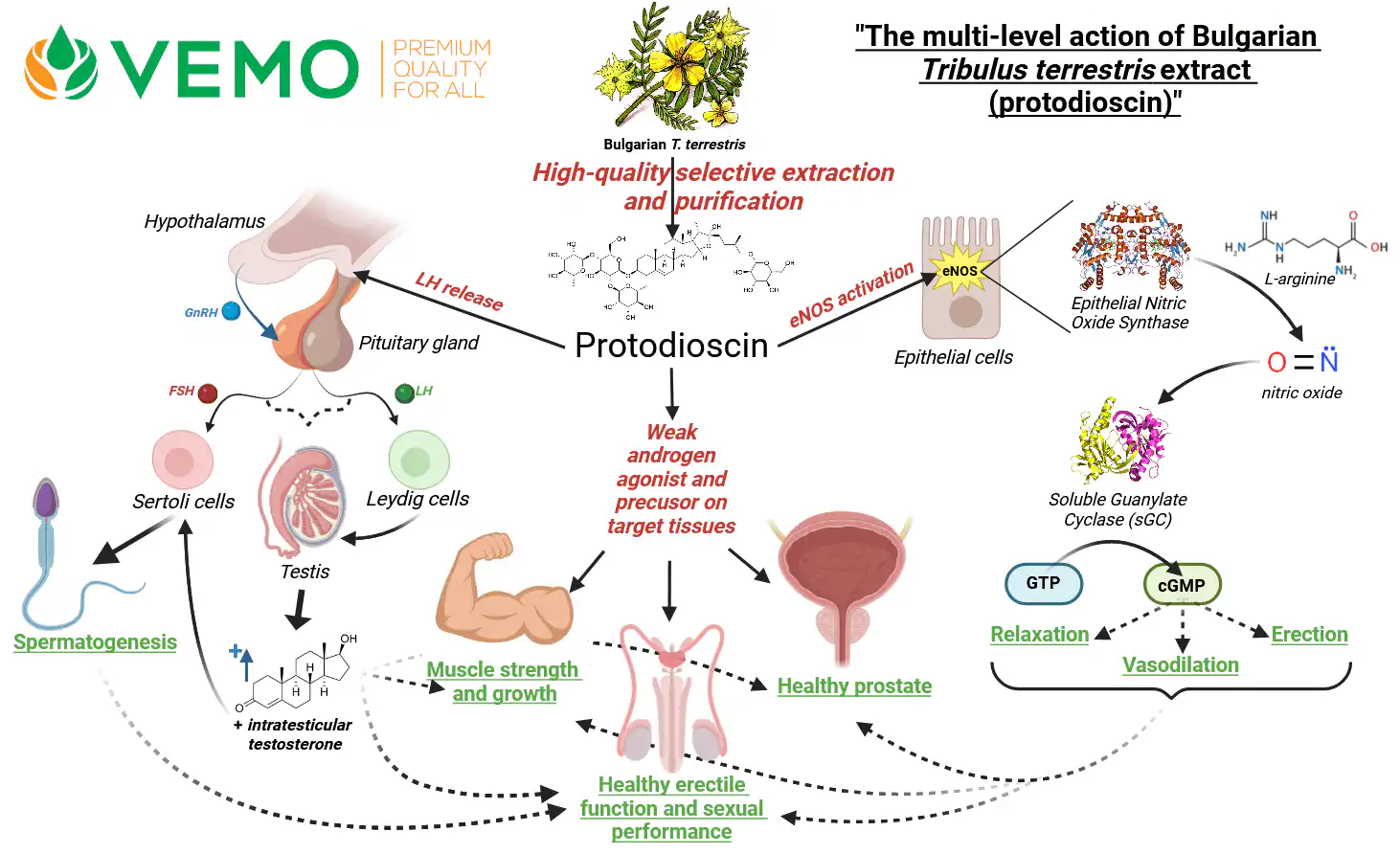
BULGARIAN TRIBULUS TERRESTRIS (BTT)
Bulgarian Tribulus terrestris (BTT), also known as Bulgarian Tribulus or Bulgarian Tribulus extract, refers to a specific variety of the Tribulus terrestris plant primarily found in Bulgaria. This particular variety has gained attention for its potential health benefits, particularly in the realm of dietary supplements. One of its key purported advantages is its supposed ability to support testosterone levels*, which is of interest to many individuals seeking to optimize their physiological well-being.
PROTODISCIN
Research indicates that certain compounds found in Tribulus terrestris extracts , notably protodioscin, may support testosterone activity*. Protodioscin is a steroidal saponin compound with a furostanol-type structure at its core. This structural similarity is important for understanding its properties and biological activities.*
Protodioscin’s Potential Role in Male Reproductive Hormonal Pathways
- Enhanced GnRH Release: Protodioscin’s bioactivity includes enhancing the release of Gonadotropin-Releasing Hormone (GnRH) from the hypothalamus.* GnRH serves as the primary initiator of the hypothalamic-pituitary-gonadal axis, orchestrating the subsequent release of key reproductive hormones.
- Gonadotropin Stimulation: Following GnRH stimulation, the anterior pituitary gland secretes luteinizing hormone (LH) and follicle-stimulating hormone (FSH), collectively referred to as gonadotropins. These hormones play pivotal roles in regulating testicular function and spermatogenesis.
- Sertoli Cell Functions: In response to FSH signaling, Sertoli cells within the seminiferous tubules undertake crucial functions vital for sperm development. They provide structural support, facilitate nutrient transport, and secrete various factors essential for spermatogenesis, ensuring the production of functional spermatozoa.
- Leydig Cell Activation: LH predominantly targets Leydig cells within the testes, prompting the synthesis and secretion of testosterone. Testosterone, the principal male sex hormone, exerts pleiotropic effects on various physiological processes, including muscle growth, bone density maintenance, and libido regulation.
Beyond its reproductive functions, testosterone also impacts energy metabolism, mood, and overall well-being. Thus, maintaining optimal testosterone levels is crucial for sustaining physical and sexual welfare.
Exploring Protodioscin’s Potential Cardiovascular and Urogenital Benefits
Protodioscin, along with other bioactive saponins found in Bulgarian Tribulus terrestris, may support cardiovascular and urogenital health through modulation of nitric oxide (NO) signaling pathways.*
- NO Production Enhancement: Protodioscin and saponins have been implicated in supporting the stimulation of nitric oxide (NO) production in endothelial cells.* NO is a pivotal signaling molecule that regulates various physiological processes.
- Role of eNOS: Endothelial nitric oxide synthase (eNOS) catalyzes the production of NO from L-arginine. This enzymatic process is crucial for maintaining vascular tone and endothelial function, thereby contributing to cardiovascular health.
- cGMP-Mediated Effects: Elevated levels of cyclic guanosine monophosphate (cGMP), a downstream effector of NO signaling, facilitate smooth muscle relaxation within blood vessels. In penile arteries, this phenomenon enhances blood flow, promoting penile erection and supporting erectile function.
- Prostate and Urinary Health: Additionally, cGMP plays a role in maintaining prostate health and proper urinary function. By regulating smooth muscle tone within the prostate gland and urinary tract, cGMP contributes to urinary continence and prostate function.
Understanding the influence of cGMP on prostate physiology underscores its significance in promoting prostate health. Strategies aimed at enhancing cGMP signaling, such as lifestyle modifications and targeted supplementation, offer promising avenues for maintaining prostate wellness and overall urological well-being.
Unlocking Muscle Growth Potential: Protodioscin and cGMP Synergy
By elucidating the potential interplay between protodioscin, NO signaling, and downstream cGMP-mediated effects, we gain valuable insights into the probable cardiovascular and urogenital benefits associated with Bulgarian Tribulus terrestris supplementation. These findings underscore its potential as a multifaceted natural intervention for promoting overall health and well-being.*
The role of cyclic guanosine monophosphate (cGMP) extends beyond muscle growth, encompassing significant implications for prostate health and function in men.
- Muscle Protein Synthesis: cGMP signaling pathways have been implicated in the regulation of muscle protein synthesis, the process by which muscle cells build new proteins. Studies have shown that cGMP can stimulate protein synthesis in skeletal muscle cells, leading to increased muscle growth and hypertrophy.
- Muscle Cell Differentiation: cGMP signaling is involved in the differentiation of muscle precursor cells (myoblasts) into mature muscle cells (myocytes). During muscle development and regeneration, cGMP helps regulate the transition of myoblasts into functional muscle fibers, contributing to muscle growth and repair.
- Muscle Blood Flow: cGMP signaling pathways play a role in the regulation of blood flow to skeletal muscle tissue. By promoting vasodilation (relaxation of blood vessels), cGMP increases blood flow to muscles, delivering oxygen and nutrients essential for muscle growth and function.
- Regulation of Muscle Contraction: While primarily associated with muscle relaxation, cGMP signaling also influences muscle contraction processes. By modulating calcium levels and calcium sensitivity in muscle cells, cGMP can affect muscle contractility and force generation, which are essential for muscle growth and function.
- Exercise Adaptations: Exercise-induced increases in cGMP levels have been observed in skeletal muscle tissue. This suggests that cGMP signaling may play a role in mediating the adaptive responses of muscle tissue to exercise, including muscle growth, strength gains, and improvements in exercise performance.
Overall, cGMP exerts multifaceted effects on muscle growth and development, including regulation of protein synthesis, muscle cell differentiation, blood flow regulation, and modulation of muscle contraction. Understanding the role of cGMP in muscle physiology is essential for elucidating the mechanisms underlying muscle growth and for developing strategies to enhance muscle function and performance.
In summary, Bulgarian Tribulus terrestris (BTT) and its active component, protodioscin, show promise for male health, including potential benefits for muscle growth enhancement. From supporting testosterone levels to potential cardiovascular and prostate benefits, as well as promoting muscle growth, they offer holistic wellness.* Understanding their mechanisms allows informed choices for health optimization. Research into BTT and protodioscin continues, promising personalized approaches. Embracing these natural interventions empowers individuals to support vitality, well-being, and muscle growth.*
*These statements have not been evaluated by the Food and Drug Administration. This product is not intended to diagnose, treat, cure, or prevent any disease.
References
- RuxandraS, tefanescu 1,* , Amelia Tero-Vescan 2, Ancut,a Negroiu 1, Elena Aurica 1 and Camil-Eugen Vari 3 „A Comprehensive Review of the Phytochemical, Pharmacological, and Toxicological Properties of Tribulus terrestris L.“ Biomolecules. 2020 May; 10(5): 752., doi: 10.3390/biom10050752
https://www.ncbi.nlm.nih.gov/pmc/articles/PMC7277861/
2. Kalamegam Gauthaman 1, Adaikan P Ganesan “The hormonal effects of Tribulus terrestris and its role in the management of male erectile dysfunction–an evaluation using primates, rabbit and rat” 2008 Jan;15(1-2):44-54. doi: 10.1016/j.phymed.2007.11.011. PMID: 18068966.
https://pubmed.ncbi.nlm.nih.gov/18068966/
3. Mohamed Farid Roaiah 1, Yasser Ibrahim El Khayat 1, Sameh Fayek GamalEl Din 1, Mohamed Ahmed Abd El Salam 1 “Pilot Study on the Effect of Botanical Medicine (Tribulus terrestris) on Serum Testosterone Level and Erectile Function in Aging Males With Partial Androgen Deficiency (PADAM)” 2016 May 18;42(4):297-301. doi: 10.1080/0092623X.2015.1033579.
https://pubmed.ncbi.nlm.nih.gov/25849625/
4. K Milasius 1, R Dadeliene, Ju Skernevicius “The influence of the Tribulus terrestris extract on the parameters of the functional preparedness and athletes’ organism homeostasis” Fiziol Zh (1994) 2009;55(5):89-96.
https://pubmed.ncbi.nlm.nih.gov/20095389/
5. Shane Rogerson 1, Christopher J Riches, Carl Jennings, Robert P Weatherby, Rudi A Meir, Sonya M Marshall-Gradisnik “The effect of five weeks of Tribulus terrestris supplementation on muscle strength and body composition during preseason training in elite rugby league players” J Strength Cond Res 2007 May;21(2):348-53. doi: 10.1519/R-18395.1.
https://pubmed.ncbi.nlm.nih.gov/17530942/
6. Jun Kobayashi,corresponding author 1 Hiroyuki Uchida, 1 Ayaka Kofuji, 1 Junta Ito, 1 Maki Shimizu, 1 Hyounju Kim, 1 Yusuke Sekiguchi, 1 and Seiji Kushibe 2 „Molecular regulation of skeletal muscle mass and the contribution of nitric oxide: A review“ FASEB Bioadv. 2019 Jun; 1(6): 364–374., doi: 10.1096/fba.2018-00080
https://www.ncbi.nlm.nih.gov/pmc/articles/PMC6996321/
7. Linda Vignozzi 1, Sandra Filippi, Annamaria Morelli, Paolo Comeglio, Ilaria Cellai, Erica Sarchielli, Elena Maneschi, Rosa Mancina, Mauro Gacci, Gabriella Barbara Vannelli, Mario Maggi, „Testosterone/estradiol ratio regulates NO-induced bladder relaxation and responsiveness to PDE5 inhibitors“, J Sex Med. 2012 Dec;9(12):3028-40. doi: 10.1111/j.1743-6109.2012.02946.x
https://pubmed.ncbi.nlm.nih.gov/23057807/
8. K-E Andersson 1, „Mechanisms of penile erection and basis for pharmacological treatment of erectile dysfunction“ Pharmacol Rev. 2011 Dec;63(4):811-59. doi: 10.1124/pr.111.004515
https://pubmed.ncbi.nlm.nih.gov/21880989/
9. Ulrich Förstermann 1, William C Sessa „Nitric oxide synthases: regulation and function“Eur Heart J. 2012 Apr;33(7):829-37, 837a-837d. doi: 10.1093/eurheartj/ehr304.