


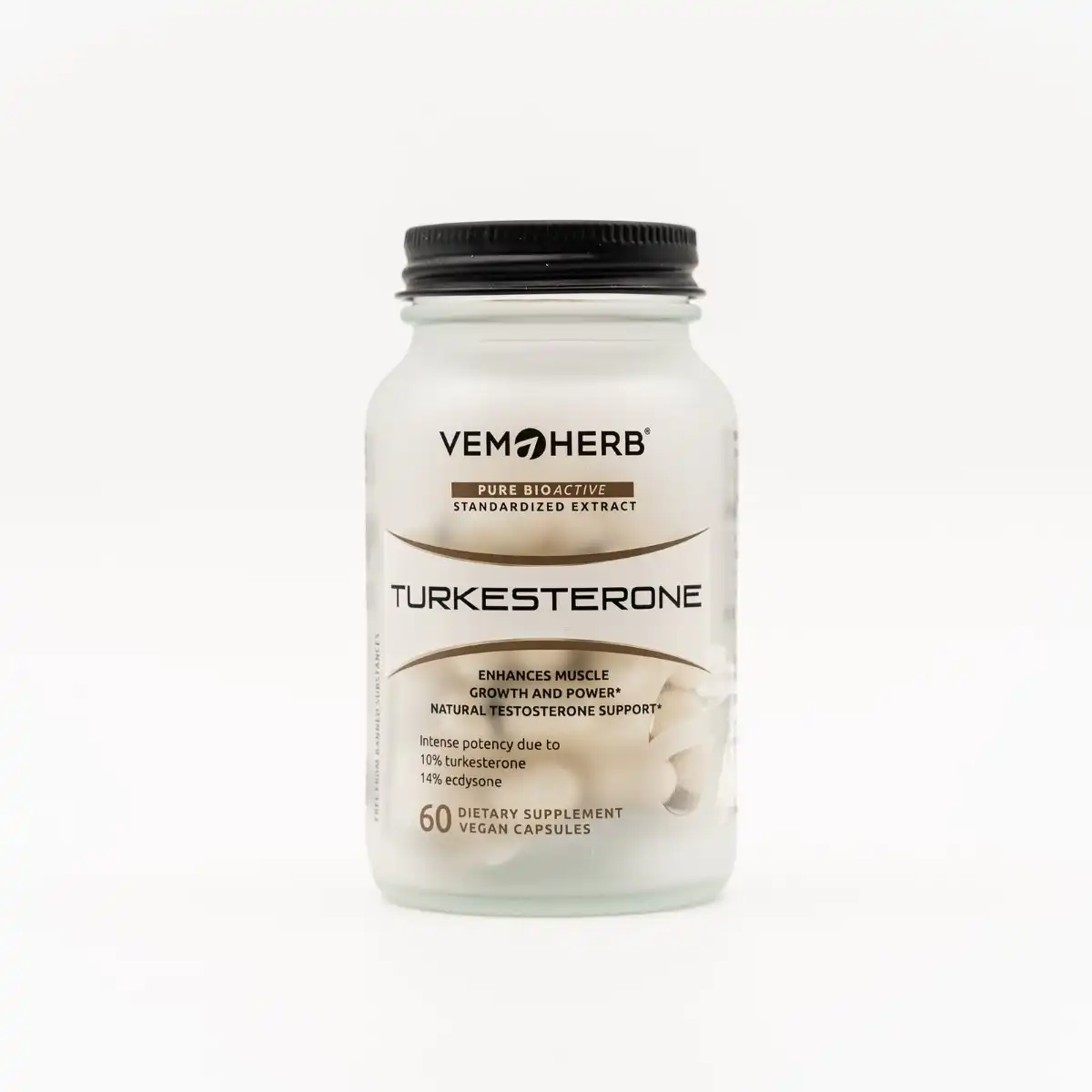

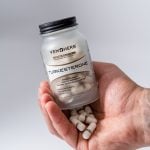
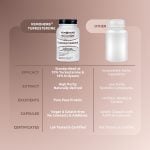



VemoHerb Turkesterone
43,90 €
POTENZA NATURALE ESPLOSIVA E CRESCITA MUSCOLARE!

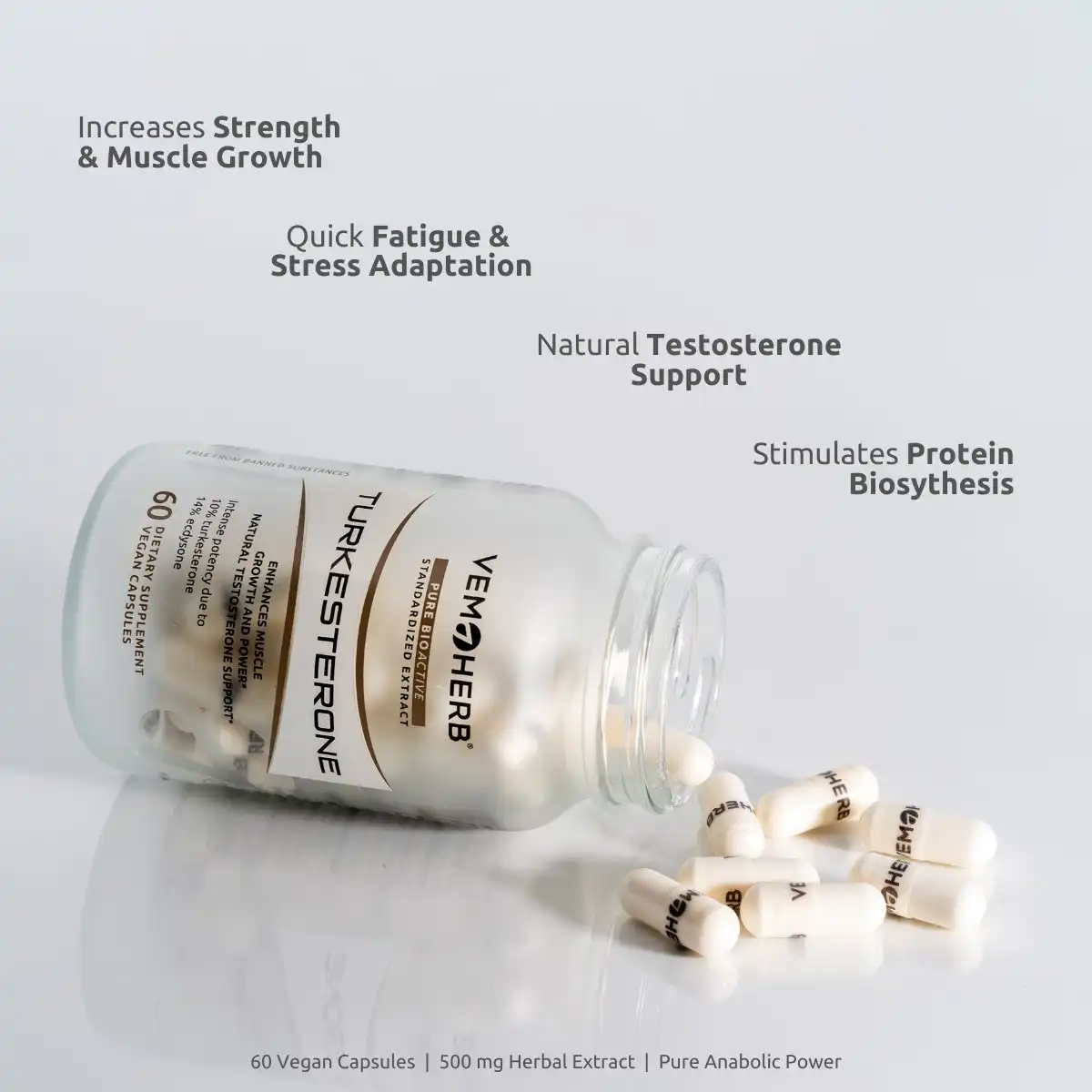
Supporta l’aumento della massa muscolare magra*
Contribuisce a un recupero più rapido dell’esercizio*
Stimola la sintesi proteica*
Potenti proprietà adattogene per un adattamento più rapido allo stress e alla fatica*
Attività antiossidante*
VemoHerb® Turkesterone è il prodotto a base di erbe perfetto che puoi utilizzare dopo l’allenamento e rimanere stupito dai risultati spettacolari dopo!
VemoHerb® Turkesterone:
- Può essere usato come stimolante per la costruzione muscolare (anabolizzante)*
- Promuove una rapida crescita e forza muscolare*
- Aiuta l’aumento del metabolismo dei carboidrati e degli acidi grassi*
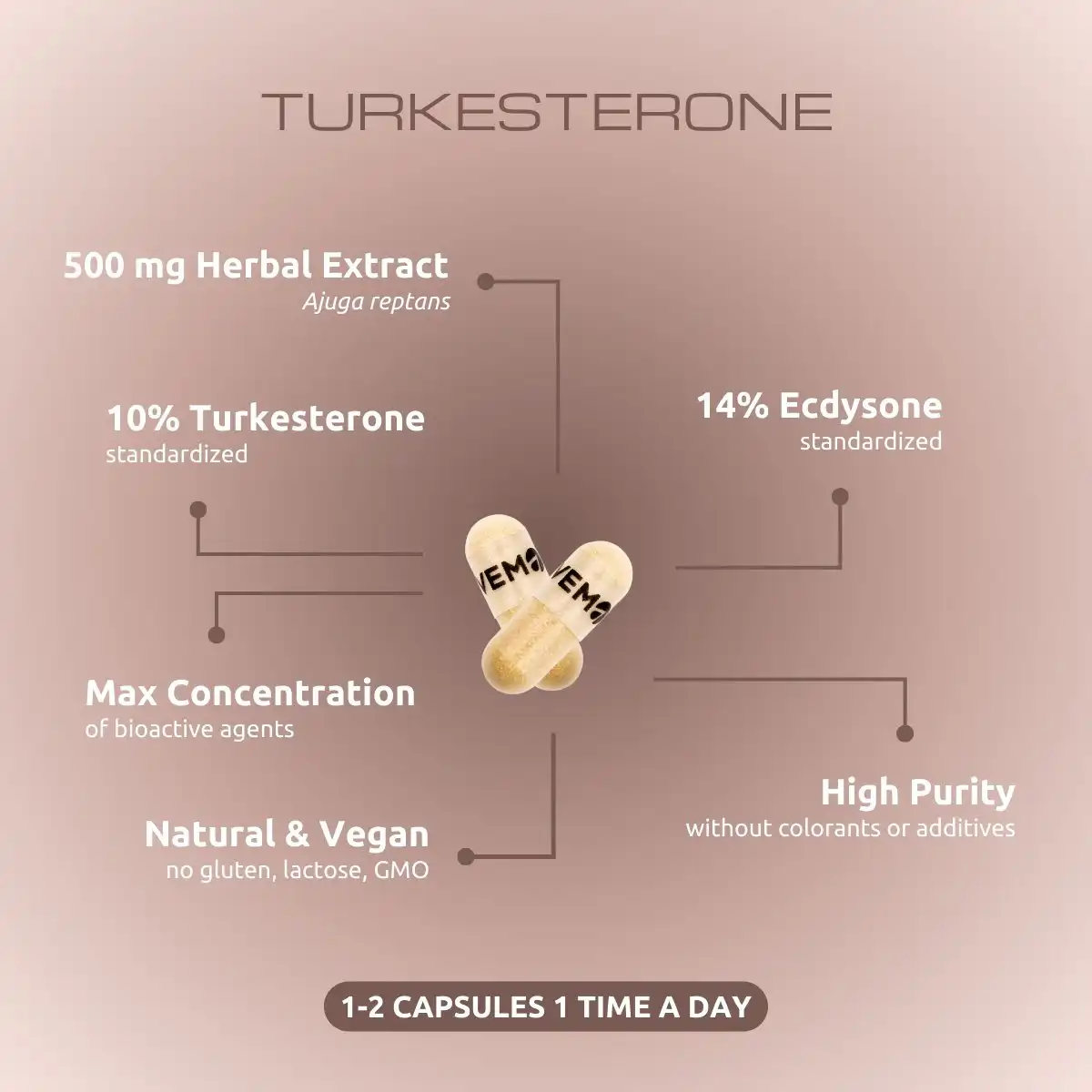
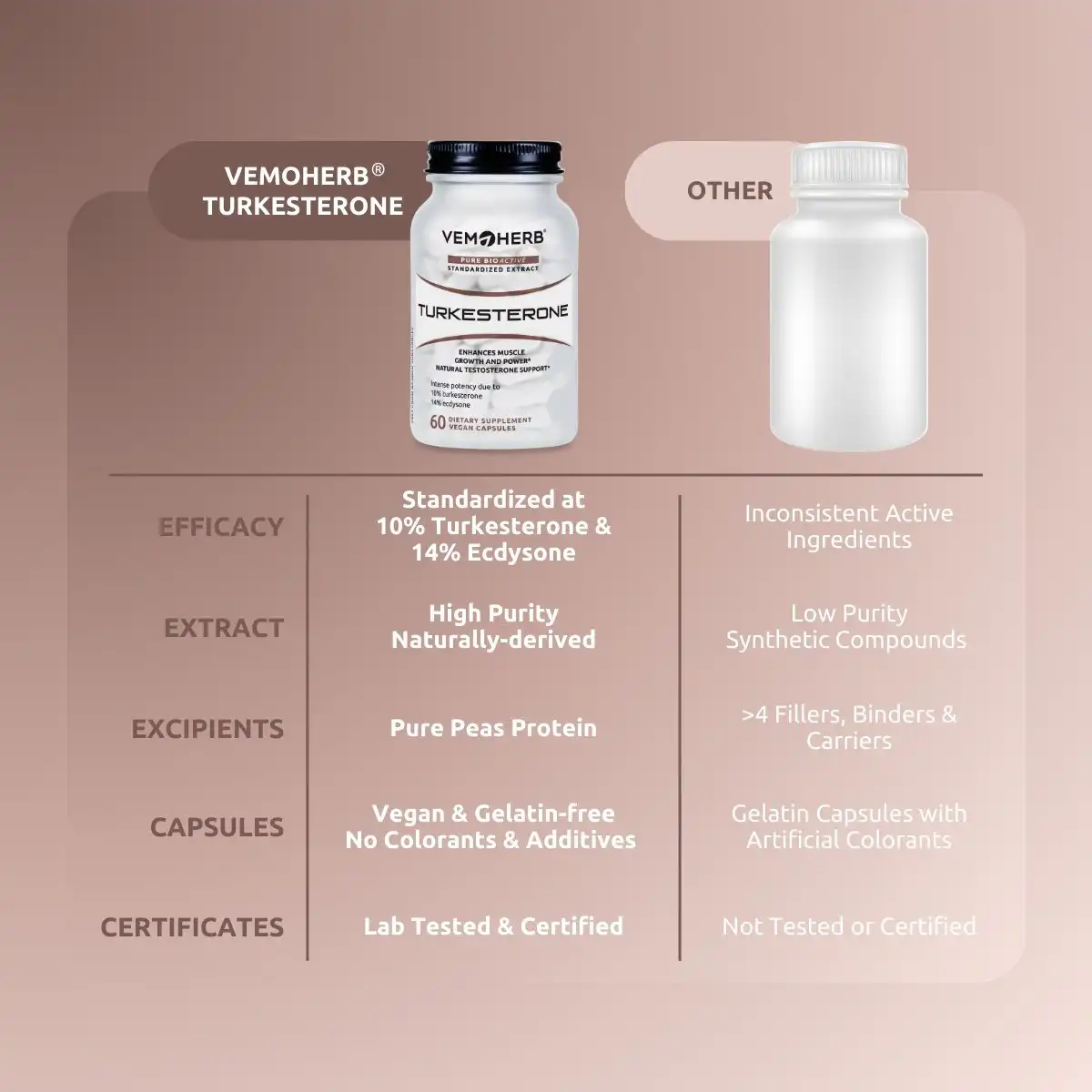
VemoHerb® Turkesterone è a base di estratto secco di Ajuga turkestanica, standardizzato almeno al 10% di turkesterone. Il turkesterone è un fitoecdisteroide(5), che si trova nelle piante. Gli ecdisteroidi, così come il testosterone, hanno la capacità di indurre la crescita muscolare nell’organismo umano. Tuttavia, sono preferiti al testosterone, poiché nessun effetto collaterale steroideo, come la ginecomastia o la caduta dei capelli, è associato alla loro assunzione. [1]*
Il Turkesterone è considerato il composto per la costruzione muscolare più efficiente del gruppo degli ecdisteroidi. [2,3] Stimola il metabolismo dei carboidrati e la sintesi proteica, con conseguente aumento della massa muscolare.[8]* Allo stesso tempo, VemoHerb® Turkesterone aiuta a bruciare i grassi.[6]* Il Turkesterone aiuta ad aumentare le riserve di glicogeno nel muscoli, che sono direttamente correlati alla produzione di energia, sotto forma di ATP.* Ciò consente di eseguire esercizi più intensi senza avvertire affaticamento e stanchezza muscolare.[7, 10, 12]*
Questo fitoecdisteroide non ha solo effetti anabolici sui muscoli scheletrici rendendoli più grandi, ma riduce anche il danno muscolare durante gli allenamenti intensi. Pertanto, gli atleti traggono vantaggio sia dalla costruzione di massa muscolare magra, sia dal recupero più veloce dopo ogni sessione, il che consente allenamenti più intensi e frequenti. Ecco perché il Turkesterone è stato utilizzato da sportivi e culturisti per migliorare le prestazioni fisiche e per promuovere la vitalità.[6]* VemoHerb Turkesterone è l’opzione perfetta per il post-allenamento, in quanto è un integratore anabolico, ideale per gli sport e gli esercizi legati alla forza allenamento, in particolare bodybuilding.[7]*
La confezione contiene
60 capsule vegane
Active substances in one capsule
500mg Estratto di Ajuga Turkestanica (10% turkesterone)
Dose giornaliera consigliata
1-2 capsule al giorno – preferibilmente prima dell’allenamento
Istruzioni per l’uso
Assumere lontano dai pasti o come indicato in etichetta.
Il prodotto è un integratore alimentare non un farmaco. Il prodotto non sostituisce una dieta variata. Non superare la dose giornaliera raccomandata. Non è raccomandato per donne in gravidanza, allattamento e bambini!
| *Queste affermazioni non sono state valutate dalla Food and Drug Administration. Questo prodotto non ha lo scopo di diagnosticare, trattare, curare o prevenire alcuna malattia. |
Riferimenti:
1.Gorelick-Feldman, J., Cohick, W. and Raskin, I., 2010. Ecdysteroids elicit a rapid Ca2+ flux leading to Akt activation and increased protein synthesis in skeletal muscle cells. Steroids, 75(10), pp.632-637.
Phytoecdysteroids, structurally similar to insect molting hormones, produce a range of effects in mammals, including increasing growth and physical performance. In skeletal muscle cells, phytoecdysteroids increase protein synthesis. In this study we show that in a mouse skeletal muscle cell line, C2C12, 20-hydroxyecdysone (20HE), a common phytoecdysteroid in both insects and plants, elicited a rapid elevation in intracellular calcium, followed by sustained Akt activation and increased protein synthesis. The effect was inhibited by a G-protein coupled receptor (GPCR) inhibitor, a phospholipase C (PLC) inhibitor, and a phosphoinositide kinase-3 (PI3K) inhibitor.
2. Syrov, V., Hushbaktova, Z., Tashmuhamedova, M. and Saatov, Z., 1990. Experimental study on biological effects of phytoecdisteroids on mammals. European Journal of Pharmacology, 183(5), p.1753.“]
In experiments with white mice it has been established that phytoecdisteroides turkesteron, ecdisteron and 2-desoxy-alpha-ecdison in the dose of 5 mg on 1 kg of body mass stimulate the protein synthesis. Using the model of protein synthesis from mice liver it has been shown that the action of phytoecdisteroides is connected with the rise of poliribosome functional activity and rate increase of protein macromolecules formation. Preliminary administration of actinomycin D does not prevent the effect of protein synthesis stimulation. It has been concluded that the anabolic effect of phytoecdisteroides in mammals organism is connected not with induction of RNA synthesis but with the acceleration of translocation processes.
3. Syrov, V., 2000. Comparative experimental investigation of the anabolic activity of phytoecdysteroids and steranabols. Pharmaceutical Chemistry Journal, 34(4), pp.193-197.
Many compounds originally isolated from plants have been used since ancient times as drugs. Among the classes of natural substances isolated relatively recently, of special interest are the so-called phytoecdysteroids. These compounds, structurally close or identical to the hormones of ecdysis (molting) and metamorphosis in insects, were found to be capable of activating protein biosynthesis in of mammals [1]. However, these drugs were not studied with respect to their possible anabolizing action upon the organism, especially in comparison with the steroidal anabolic preparations- derivatives of the male sex hormones, presently the most effective stimulants of the protein-anabolic processes.
4. Gorelick-Feldman, J., Cohick, W. and Raskin, I., 2010. Ecdysteroids elicit a rapid Ca2+ flux leading to Akt activation and increased protein synthesis in skeletal muscle cells. Steroids, 75(10), pp.632-637.
Phytoecdysteroids, structurally similar to insect molting hormones, produce a range of effects in mammals, including increasing growth and physical performance. In skeletal muscle cells, phytoecdysteroids increase protein synthesis. In this study we show that in a mouse skeletal muscle cell line, C2C12, 20-hydroxyecdysone (20HE), a common phytoecdysteroid in both insects and plants, elicited a rapid elevation in intracellular calcium, followed by sustained Akt activation and increased protein synthesis. The effect was inhibited by a G-protein Coupled Receptor (GPCR) inhibitor, a phospholipase C (PLC) inhibitor, and a phosphoinositide kinase-3 (PI3K) inhibitor.
5. Dinan, L., Bourne, P., Whiting, P., Tsitsekli, A., Saatov, Z., Dhadialla, T., Hormann, R., Lafont, R. and Coll, J., 2003. Synthesis and biological activities of turkesterone 11α-acyl derivatives. Journal of Insect Science, 3(1).
Turkesterone is a phytoecdysteroid possessing an 11α-hydroxyl group. It is an analogue of the insect steroid hormone 20-hydroxyecdysone. Previous ecdysteroid QSAR and molecular modelling studies predicted that the cavity of the ligand binding domain of the ecdysteroid receptor would possess space in the vicinity of C-11/C-12 of the ecdysteroid. We report the regioselective synthesis of a series of turkesterone 11α-acyl derivatives in order to explore this possibility. The structures of the analogues have been unambiguously determined by spectroscopic means (NMR and low-resolution mass spectrometry). Purity was verified by HPLC. Biological activities have been determined in Drosophila melanogaster BII cell-based bioassay for ecdysteroid agonists and in an in vitro radioligand-displacement assay using bacterially-expressed D. melanogaster EcR/USP receptor proteins. The 11α-acyl derivatives do retain a significant amount of biological activity relative to the parent ecdysteroid. Further, although activity initially drops with the extension of the acyl chain length (C2 to C4), it then increases (C6 to C10), before decreasing again (C14 and C20). The implications of these findings for the interaction of ecdysteroids with the ecdysteroid receptor and potential applications in the generation of affinity-labelled and fluorescently-tagged ecdysteroids are discussed.
6. Das, N., Mishra, S., Bishayee, A., Ali, E. and Bishayee, A., 2021. The phytochemical, biological, and medicinal attributes of phytoecdysteroids: An updated review. Acta Pharmaceutica Sinica B, 11(7), pp.1740-1766.
The phytoecdysteroids (PEs) comprise a large group of biologically-active plant steroids, which have structures similar to those of insect-molting hormones. PEs are distributed in plants as secondary metabolites that offer protection against phytophagus (plant-eating) insects. When insects consume the plants containing these chemicals, they promptly molt and undergo metabolic destruction; the insects eventually die. Chemically, ecdysteroids are a group of polyhydroxylated ketosteroids that are structurally similar to androgens. The carbon skeleton of ecdysteroids is termed as cyclopentanoperhydro-phenanthrene with a β-side chain at carbon-17. The essential characteristics of ecdysteroids are a cis-(5β-H) junction of rings A and B, a 7-en-6-one chromophore, and a trans-(14α-OH) junction of rings C and D. Plants only synthesize PEs from mevalonic acid in the mevalonate pathway of the plant cell using acetyl-CoA as a precursor; the most common PE is 20-hydroxyecdysone. So far, over 400 PEs have been identified and reported, and a compilation of 166 PEs originating from 1998 has been previously reviewed. In the present review, we have summarized 212 new PEs reported between 1999 and 2019. We have also critically analyzed the biological, pharmacological, and medicinal properties of PEs to understand the full impact of these phytoconstituents in health and disease.
7. Anabolic compounds in Ajuga turkestanica may potentially improve muscle growth and recovery.
Believed to carry bio-active compounds that resemble androgens in structure, Ajuga turkestanica could potentially impart such post-workout benefits as:
8.Cheng, D., Yousef, G., Grace, M., Rogers, R., Gorelick-Feldman, J., Raskin, I. and Lila, M., 2008. In vitro production of metabolism-enhancing phytoecdysteroids from Ajuga turkestanica. Plant Cell, Tissue and Organ Culture, 93(1), pp.73-83.
In order to develop a sustainable source of metabolism-enhancing phytoecdysteroids, cell suspension and hairy root cultures were established from shoot cultures of wild-harvested Ajuga turkestanica, a medicinal plant indigenous to Uzbekistan. Precursors of phytoecdysteroids (acetate, mevalonic acid cholesterol) or methyl jasmonate (an elicitor) were added to subculture media to increase phytoecdysteroid accumulation. In cell suspension cultures, 20-hydroxyecdysone (20E) content increased 3- or 2-fold with the addition of 125 or 250μM methyl jasmonate, respectively, compared to unelicited cultures. Precursor addition, however, did not provoke phytoecdysteroid accumulation. In hairy root cultures, addition of sodium acetate, mevalonic acid, and methyl jasmonate, but not cholesterol, increased phytoecdysteroid content compared to unelicited cultures. Hairy root cultures treated with 150mgl−1 sodium acetate, or 15 or 150mgl−1 mevalonic acid, increased 20E content approximately 2-fold to 19.9, 20.4 or 21.7μgmg−1, respectively, compared to control (10.5μgmg−1). Older hairy root cultures, extracted after the seventh subculture cycle, also showed increases in 20E content (24.8μgmg−1), turkesterone (0.9μgmg−1) and cyasterone (8.1μgmg−1) compared to control cultures maintained for a shorter duration of four subculture cycles. Doses of 10 or 20μgml−1 hairy root extract increased protein synthesis by 25.7% or 31.1%, respectively, in a C2C12 mouse skeletal cell line. These results suggest that sustainable production of metabolically active phytoecdysteroid can be achieved through hairy root culture systems.
9. Kokoska, L. and Janovska, D. – Chemistry and pharmacology of Rhaponticum carthamoides: A review. Phytochemistry (2009) 70: 842.
Rhaponticum carthamoides (Willd.) Iljin is a perennial herb, commonly known as a maral root or Russian leuzea, which has been used for centuries in eastern parts of Russia for its marked medicinal properties. This review based on 117 literary sources, with many of them being originally published in non-English languages (mainly in Russian), discusses the current knowledge of traditional uses, chemistry, biological effects and toxicity of this species. Several different classes of compounds were previously isolated from various parts of R. carthamoides of which the main groups are steroids, particularly ecdysteroids, and phenolics (flavonoids and phenolic acids) accompanied with polyacetylenes, sesquiterpene lactones, triterpenoid glycosides and terpenes (essential oil). A comprehensive account of the chemical constituents is given in this review (figures of 120 structures are shown). Various types of preparations, extracts and individual compounds derived from this species have been found to possess a broad spectrum of pharmacological effects on several organs such as the brain, blood, cardiovascular and nervous systems as well as on different biochemical processes and physiological functions including proteosynthesis, work capacity, reproduction, and sexual function. Moreover, the extracts and preparations from the plant, which are hopefully safe, exhibited various additional biological effects e.g. antioxidant, immunomodulatory, anticancerogenic, antimicrobial.
10. Gorelick-Feldman, J., MacLean, D., Ilic, N., Poulev, A., Lila, M., Cheng, D. and Raskin, I. – Phytoecdysteroids Increase Protein Synthesis in Skeletal Muscle Cells. J Agric Food Chem. (2008) 56: 3532.
Phytoecdysteroids, which are structurally similar or identical to insect molting hormones, produce a range of effects in mammals, including increasing growth and physical performance. To study the mechanism of action of phytoecdysteroids in mammalian tissue, an in vitro cellular assay of protein synthesis was developed. In C2C12 murine myotubes and human primary myotubes, phytoecdysteroids increased protein synthesis by up to 20%. In vivo, ecdysteroids increased rat grip strength. Ecdysteroid-containing plant extracts produced similar results. The effect was inhibited by a phosphoinositide kinase-3 inhibitor, which suggests a PI3K-mediated mechanism.
11. Chermnykh NS, Shimanovskiĭ NL, Shutko GV, Syrov VN – The action of methandrostenolone and ecdysterone on the physical endurance of animals and on protein metabolism in the skeletal muscles
The results of the comparative study on the myotropic activity of methandrostenolone and ecdysterone and their effects on physical endurance of animals suggested that ecdysterone possessing a wider spectrum of the anabolic action on the contractile proteins of the skeletal muscles exerts a more pronounced influence on physical endurance of animals without their preliminary training.
12. Jonathan Gorelick-Feldman, David MacLean, Nebojsa Ilic, Alexander Poulev, Mary Ann Lila, Diana Cheng and Ilya Raskin – Phytoecdysteroids Increase Protein Synthesis in Skeletal Muscle Cells
Phytoecdysteroids, which are structurally similar or identical to insect molting hormones, produce a range of effects in mammals, including increasing growth and physical performance. To study the mechanism of action of phytoecdysteroids in mammalian tissue, an in vitro cellular assay of protein synthesis was developed. In C2C12 murine myotubes and human primary myotubes, phytoecdysteroids increased protein synthesis by up to 20%. In vivo, ecdysteroids increased rat grip strength. Ecdysteroid-containing plant extracts produced similar results. The effect was inhibited by a phosphoinositide kinase-3 inhibitor, which suggests a PI3K-mediated mechanism.
Prodotti correlati
Maglietta
15,00 €

VemoHerb Bulgarian Tribulus Maxx
35,99 €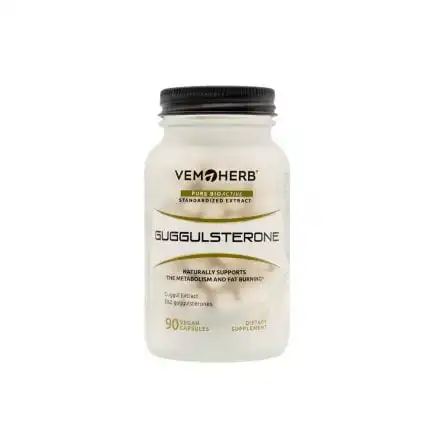
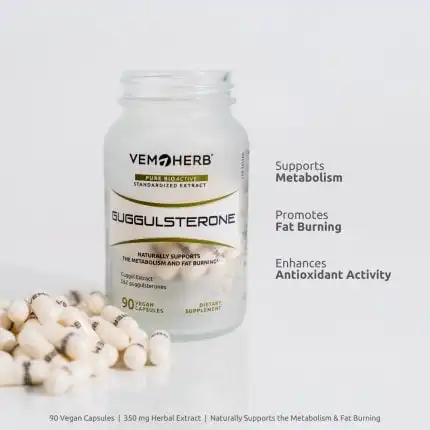
VemoHerb Guggulsterone
33,70 €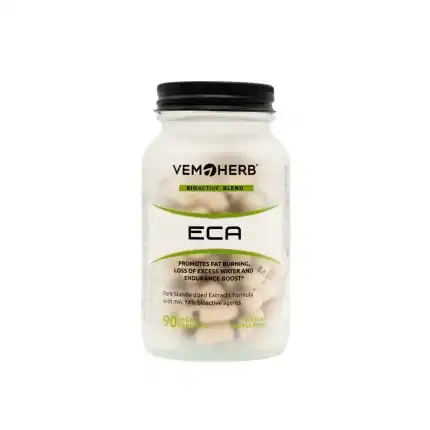

VemoHerb EKA
22,70 €
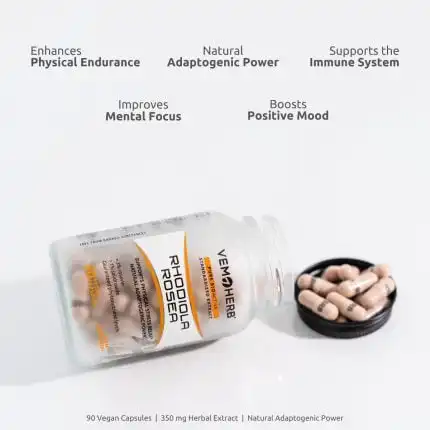
VemoHerb Rhodiola Rosea
30,80 €


VemoHerb Recharge
29,30 €

Recensioni
Ancora non ci sono recensioni.